
EXECUTIVE PERSPECTIVES | HORIZON SPI
Strategy Without Oversight Produces Noise
AI strategy creates value when leadership can see what is working, decide what should scale, and stop what only creates activity.
Oversight does not constrain AI strategy. It gives it a direction worth following.
This article is part of the Horizon SPI Executive Perspectives series on AI strategy, governance, and executive oversight.
One of the most common AI governance failures is not dramatic.
It is not a data breach, a regulatory violation, or a failed system implementation. It is a leadership team that has invested meaningfully in AI, launched initiatives across multiple departments, and still cannot answer a straightforward question: which of these efforts is actually working?
That is where AI strategy begins to lose its shape.
When AI is treated as everyone's priority, it becomes no one's accountability. Initiatives multiply. Budgets are allocated. Vendors are evaluated. Pilots expand. Activity increases. And at the executive level, the signal disappears into the noise.
Executive Summary
AI strategy does not fail by collapsing. It fails by diffusing, spreading across departments, vendors, and use cases without the decision rights, investment discipline, or review cadence needed to distinguish activity from value. This article argues that oversight gives AI strategy a direction worth following. For executive leadership teams in small and mid-sized organizations, three conditions determine whether AI produces measurable results or organizational noise: defined decision rights, investment discipline tied to outcomes, and a predictable review cadence. None of these requires elaborate governance. All three require executive decisions made early.
The Diffusion Problem
AI strategy fails in a specific and predictable way when oversight is absent. It does not usually collapse. It diffuses.
Individual teams make reasonable local decisions. A department head approves a vendor because it solves an immediate problem. A project lead expands a pilot because adoption metrics look promising. An executive sponsors an initiative because a competitor appears to be moving in that direction. All of these decisions could be considered acceptable on their own.
But without defined decision rights, no one is integrating these moves into a coherent organizational direction. Without a review cadence, no one is asking whether the portfolio of initiatives is creating enterprise value or simply enterprise activity.
That distinction matters. McKinsey's 2025 State of AI research found that organizations capturing value from AI are not just adopting tools; they are using management practices across six dimensions — strategy, operating model, technology, data, adoption, and scaling — to turn AI into measurable business impact. BCG's research on AI-first readiness makes the same point more directly: focus on a few high-value initiatives, demonstrate measurable impact, and fund what works. Only 5% of companies in BCG's 2025 global study of more than 1,250 firms are seeing real returns on AI investment at scale.
Diffusion is the opposite of that discipline. In many organizations, it becomes the default.
Decision Rights Are the Missing Link
Decision rights are more than an organizational chart. They are a clear answer to a specific set of questions that every AI initiative should be able to answer before it receives resources.
Who has the authority to approve this use case? Who owns the business outcome? Who is accountable if it underperforms or creates risk? Who reviews performance against the original investment thesis? Who decides whether to scale, pause, redesign, or stop?
When those questions have no clear owner, AI strategy becomes political rather than disciplined. The initiatives that survive are often the ones with the most internal momentum, the loudest sponsor, or the easiest story to tell, not necessarily the ones creating the most value.
That dynamic is expensive because it compounds over time. Organizations can spend two or three years building AI capability that cannot be defended clearly at the board level because no one assigned ownership of the outcomes. The capability exists. The accountability does not.
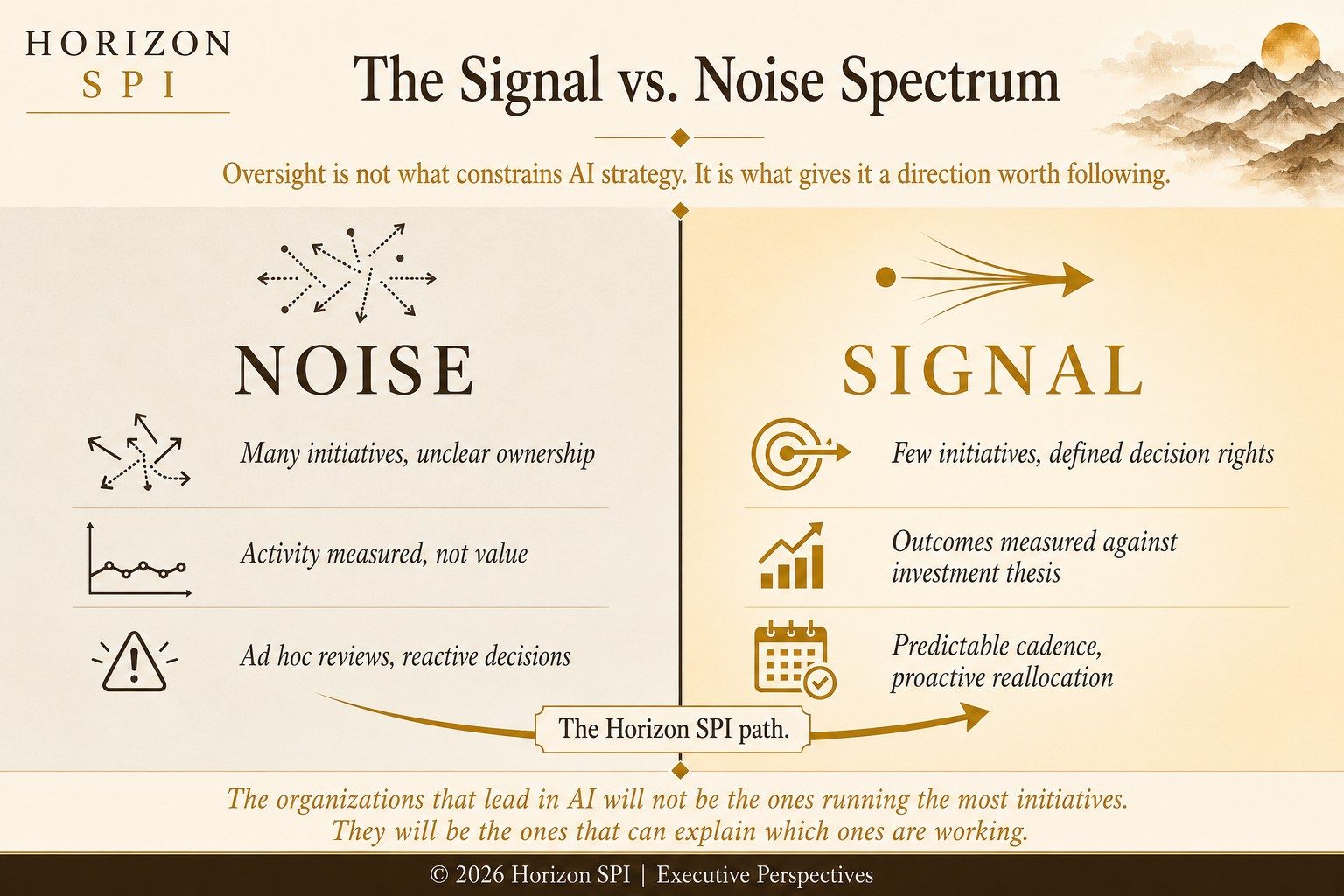
Figure 1 — The Signal vs. Noise Spectrum
Review Cadence Is Not Bureaucracy
The second missing piece is review cadence.
This aspect is where many organizations hesitate. Executives are already in too many meetings. Adding a formal AI governance review can sound like another layer of process. But the absence of a review cadence does not remove the conversation. It only ensures the conversation happens reactively — when something has gone wrong, when a vendor relationship has become entrenched, or when a board member asks a question no one can answer cleanly.
A disciplined review cadence answers three questions on a predictable schedule: Are our AI initiatives delivering against the outcomes they were funded to produce? Are the governance controls proportionate to the risk being introduced? Are the right people still accountable for the decisions being made?
That is management discipline, not bureaucracy.
Gartner's 2025 Market Guide for AI Governance Platforms describes AI governance infrastructure as an emerging market designed to provide central oversight, risk management, and execution of necessary controls across AI systems. The technology matters, but the leadership principle is broader: AI needs a system of visibility before it becomes too distributed to govern effectively.
What Leadership Needs to Establish
Before AI strategy can produce signal rather than noise, three executive conditions need to be in place.
First, defined decision rights. Leadership must clarify who approves AI use cases, who owns vendor selection, who is accountable for performance, and who has escalation authority when risk or underperformance appears.
Second, investment discipline. Resources should be tied to measurable business outcomes, not deployment activity. A pilot is not a strategy. A tool subscription is not transformation. An adoption metric is not the same as value.
Third, review cadence. Leadership needs a predictable rhythm for evaluating performance, adjusting priorities, reallocating resources, and reaffirming accountability.
None of these requires an elaborate governance bureaucracy. They require executive decisions. And they are much easier to make before AI becomes embedded across the organization than after informal structures have already hardened into operating reality.
The Horizon SPI Perspective
From Horizon SPI’s perspective, strategy without oversight is not a minor gap. It is the condition under which AI spending becomes noise rather than signal.
The organizations that generate consistent value from AI are not necessarily the ones with the most sophisticated tools or the largest budgets. They are the ones with the clearest accountability structures. They know who owns what. They review performance against defined outcomes. They make resource decisions based on evidence rather than activity.
That level of clarity does not come from AI tools. It comes from executive design.
AI governance, in this sense, is not a defensive function. It is the leadership structure that protects strategic intent. It ensures that AI adoption remains connected to capital allocation, operational redesign, risk ownership, and measurable value creation.
The Closing Reality
AI will not organize itself around your strategic priorities.
It will organize itself around whoever has the most momentum, the most budget, and the least resistance.
Oversight is not what constrains AI strategy. It is what gives AI strategy a direction worth following. The organizations that lead in AI adoption will not be the ones running the most initiatives. They will be the ones that can explain, at any point, which initiatives are working, why they matter, who owns them, and what leadership will do about the ones that are not.
That kind of clarity is a leadership decision.
It does not come from the technology.
Source References
- McKinsey & Company — The State of AI: Global Survey 2025 (November 2025)
https://www.mckinsey.com/capabilities/quantumblack/our-insights/the-state-of-ai - Boston Consulting Group — How Companies Can Prepare for an AI-First Future (June 2025)
https://www.bcg.com/publications/2025/how-companies-can-prepare-for-ai-first-future - Boston Consulting Group — Are You Generating Value from AI? The Widening Gap (September 2025)
https://www.bcg.com/publications/2025/are-you-generating-value-from-ai-the-widening-gap - Gartner — Market Guide for AI Governance Platforms (November 2025)
https://www.gartner.com/en/documents/7145930
Horizon Strategic Partners International advises executive leadership teams on AI strategy, governance, and operating model design. This article is part of the Horizon SPI Executive Perspectives series.
Working With Horizon SPI
Horizon SPI works with executive teams navigating AI governance, oversight, strategic prioritization, and capital allocation decisions.
Organizations evaluating how to move from fragmented AI activity to accountable direction are invited to request a confidential executive strategy conversation.