
The Shift from Generative AI to Agentic AI
Why the shift from generative AI to agentic AI is becoming a leadership, governance, and operating model question.
The Agentic AI Economy | Article 1 of 8
Horizon SPI Executive Intelligence Series
By Steven Kiss, MBA | June 2026
For the past several years, most boardroom conversations about AI have centered on generative systems: tools that produce text, images, code, analysis, and increasingly sophisticated reasoning from a human prompt.
Organizations moved quickly. Productivity pilots were launched across departments. Internal AI task forces emerged almost overnight. ChatGPT became part of mainstream business vocabulary. Executive teams began asking a practical question:
How do we use this technology?
That original question is now evolving.
A more consequential transition is now visible. Artificial intelligence is no longer being developed only to assist human work. Increasingly, it is being designed to initiate actions, coordinate workflows, make operational decisions, and execute tasks autonomously within defined environments.
This shift — from generative AI to agentic AI — changes the fundamental relationship between enterprise organizations and the software systems they operate. That is not a modest claim. But it is a specific one.
For executive leadership teams, understanding this shift is becoming a core strategic requirement.
Three Eras of Intelligent Automation
To understand why this transition matters, it helps to look at how enterprise automation has evolved over the past decade.
Era 1: Traditional Automation
The first wave of enterprise automation was rule-based. Robotic Process Automation (RPA) and workflow tools executed predefined, repetitive tasks: processing invoices, routing emails, and executing data transfers. These systems were fast and consistent, but they were brittle. They could only do exactly what they were programmed to do, and nothing else. Any variation in input broke the process.
Era 2: Generative AI
The second era introduced intelligence into content creation. Large language models such as GPT-4 and Claude could read, write, summarize, translate, and reason, producing outputs of remarkable quality from a simple text prompt. Generative AI has changed knowledge-work productivity, enabling professionals to draft documents, generate code, analyze data, and synthesize information much faster than before.
But generative AI still operated within an important limitation: it remained fundamentally reactive. A human initiated the interaction, evaluated the output, and decided what happened next. The capability was powerful, but the operating pattern remained largely reactive.
Era 3: Agentic AI
The third era changes the operating model. Agentic AI systems are goal-driven. You give them an objective; they work out how to achieve it. They plan, execute, adjust when conditions change, and complete multi-step work without waiting for a human to authorize each step. The distinction from generative AI is not sophistication. It is initiative.
This is not a faster version of what came before. It introduces a different kind of participant inside the enterprise: a system that can act, not only respond.
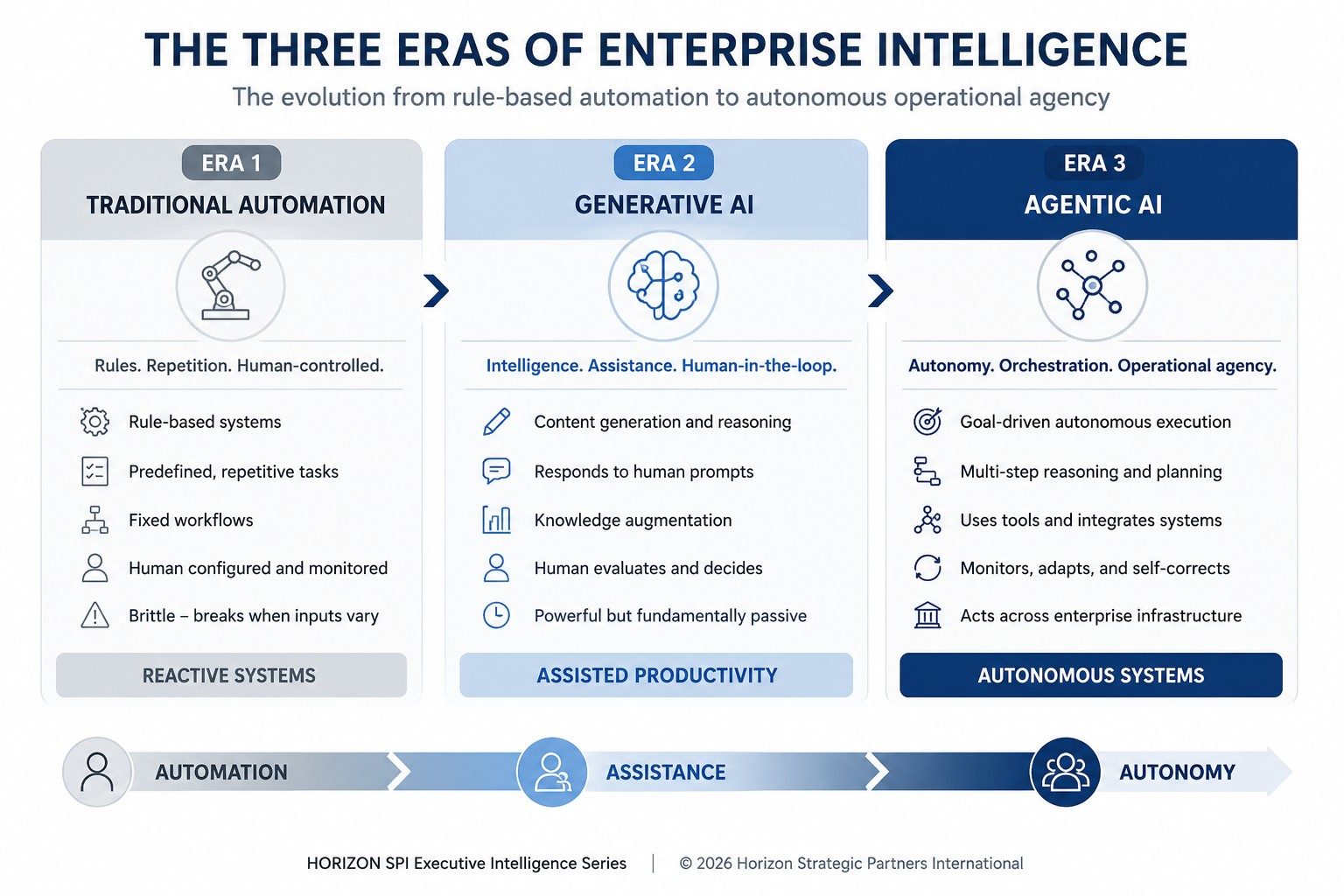
Diagram 1: The Three Eras of Enterprise Intelligence
Enterprise AI is evolving from rules-based automation to generative assistance and now toward autonomous systems that can plan, act, and adapt across operational workflows.
What Makes a System Agentic
The term “agentic” refers to systems that can take independent action in pursuit of an objective. What separates agentic AI from earlier forms of automation is operational agency: the ability to reason, act, adapt, and execute across a sequence of tasks with limited human intervention.
Three capabilities define this shift.
1. Autonomy
Agentic systems operate without continuous human direction. A human sets the objective; the AI determines how to achieve it. This is fundamentally different from a chatbot that responds to instructions or an automation tool that follows a script. Agentic AI begins to exercise a form of operational judgment.
2. Multi-Step Reasoning
Generative AI usually completes a task within a single interaction. Agentic AI can chain reasoning steps across time. It can plan a research process, execute each phase in sequence, evaluate what it has found, revise its approach, and synthesize a final output without returning to a human between steps.
3. Acting in the World
The larger shift is that agentic AI does not only produce information. It can take action. It can browse the internet, write and execute code, send emails, query databases, fill in forms, interact with software systems, and trigger downstream workflows. The system is no longer limited to producing information inside a chat window. It is increasingly interacting directly with enterprise systems, workflows, and operational infrastructure.
From Theory to Practice: A Finance Team That No Longer Waits for Month-End
Consider a finance scenario that is becoming increasingly familiar in more advanced enterprise environments.
Traditionally, companies concentrated financial reconciliation around month-end. A team of analysts would spend three to four days pulling data from multiple systems, cross-referencing entries, identifying discrepancies, escalating exceptions, and producing a reconciled report. It was skilled, necessary, and time-consuming work. For experienced finance professionals, this work could consume a meaningful part of every month.
- In some agentic AI deployments, that process has been reduced to under six hours. -
The agent does not simply automate the data pull. It reads the state of the financial system, works through discrepancies, separates exceptions that require human review from those it can resolve, writes the reconciliation report, and flags anomalies for the CFO without requiring another prompt after the initial goal is set. The finance team does not disappear. They redirect their attention to the strategic work the agent cannot do: interpreting trends, advising leadership, and stress-testing assumptions.
This is one practical signature of agentic AI: reducing the time people spend on work that systems can now perform faster, more consistently, or at a larger scale.
A similar pattern is now visible in large enterprise deployments. JPMorgan Chase now runs over 450 agentic AI use cases in daily production, spanning document generation for investment banking, automated M&A memo drafting, trade settlement, and fraud detection. Real-time fraud monitoring has saved an estimated $1.5 billion, with a 95% reduction in false positives.
Klarna's AI agent operates across 23 markets in 35 languages, reducing resolution time from 11 minutes to under 2 minutes and delivering an estimated $60 million in annual savings, equivalent to 853 full-time agents. The savings were real, but the lesson was more complicated: Klarna subsequently experienced a decline in customer satisfaction quality and began rehiring human agents, a course correction that reinforced the importance of deployment philosophy, governance, and outcome quality over pure cost reduction.
Wells Fargo's virtual assistant has completed over 242 million fully autonomous customer interactions. McKinsey's analysis of scaled agent deployments shows organizations that focus AI deployment on key domains—rather than widespread experimentation—are achieving returns of $3 for every $1 invested, with profit improvements of 20% or more over two to four years.
- Agentic AI is not only a technology investment. It becomes an organizational design decision. In many settings, the evidence that the technology can work is already visible. The harder question is whether your organization is structured to deploy it, govern it, and scale it with discipline. -
That is the conversation this series is designed to advance.
Why This Transition Matters More Than Generative AI Did
Generative AI improved the productivity of individual professionals. Agentic AI begins to change how organizations operate.
When AI systems can plan, reason, and act autonomously across business processes, the implications extend far beyond individual efficiency. In the right operating environment, entire workflows can be delegated to AI agents. Processes that previously required teams of analysts, coordinators, or administrators can be executed by orchestrated networks of agents working in parallel, around the clock, without fatigue or cognitive load.
At that point, the issue moves beyond productivity improvement and into operating-model change.
The implications touch every function: finance, legal, supply chain, customer service, software development, human resources, and executive decision support. They touch every level of the workforce. And they raise governance questions that most organizations have not yet begun to address.
For most SME and mid-market leadership teams, the workforce question is the most immediate one. Agentic AI does not simply automate tasks. It restructures which human roles carry the highest organizational value. The functions most exposed are not necessarily the most junior. They are often the functions built around coordination, information routing, and structured decision-making: work that autonomous systems can increasingly perform directly. The leadership question is not how to prevent this shift, but how to redesign roles, accountabilities, and team structures before the technology makes that redesign reactive rather than deliberate.
The Numbers Signal a Turning Point
This is no longer a distant horizon. The transition to agentic AI is already underway, and adoption is accelerating.
Gartner projects that 40% of enterprise applications will embed task-specific AI agents by the end of 2026, up from less than 5% in 2024. By 2028, 33% of enterprise software will include agentic AI, enabling 15% of daily business decisions to run autonomously. McKinsey's 2025 State of AI survey found that 62% of organizations are at least experimenting with AI agents, with 23% already scaling at least one system somewhere in their enterprise. And Stanford HAI's 2026 AI Index documents perhaps the most striking capability signal: on autonomous web agent benchmarks, AI success rates climbed from 15% in 2023 to 74.3% in early 2026, within four percentage points of human performance.
The enterprise agentic AI market is projected to grow from approximately $9.9 billion in 2026 to $57.4 billion by 2031 (Mordor Intelligence), with IDC forecasting a tenfold increase in the use of AI agents by Global 2000 companies by 2027. These projections are not only about a distant future. They reflect what organizations are already budgeting for, building, and deploying.
- There is an important counterweight: Gartner projects that 40% of agentic AI projects will be cancelled by the end of 2027, driven by escalating costs, insufficient governance, and unclear ROI. Deployment without governance does not create scale. It creates exposure. -
The pilot era is narrowing. Organizations still treating agentic AI as a distant question are losing time. But organizations deploying agents without the operational and governance foundations to support them are not ahead. They are exposed.
Platform Convergence: The Industry Has Reached a Strategic Consensus
Nearly every major AI platform provider is now moving in the same direction, and the pace is accelerating. The strategic consensus is becoming clear: enterprise AI is moving beyond isolated productivity tools. It is becoming interconnected, autonomous systems capable of participating directly in operations.
Microsoft released Copilot Wave 3 in March 2026, introducing autonomous multi-step task execution across Microsoft 365, alongside Agent 365, an enterprise-grade agent management and governance control plane. OpenAI launched OpenAI Frontier in February 2026, an enterprise platform designed to deploy AI agents as organizational coworkers. Early adopters include HP, Intuit, Oracle, State Farm, Thermo Fisher, and Uber, with documented outcomes including a major manufacturer reducing a six-week production optimization cycle to a single day.
At Google Cloud Next '26 in April 2026, Google launched the Agent2Agent (A2A) interoperability protocol (already live across 150 organizations) and committed $175–185 billion in infrastructure capex for 2026, with over half allocated to the cloud. Google Cloud CEO Thomas Kurian stated at the keynote: "The experimental stage is behind us, and now the actual challenge begins." Salesforce has centered its 2026 strategy on Agentforce 360, a platform for building and managing enterprise agents across CRM, sales, service, and operations.
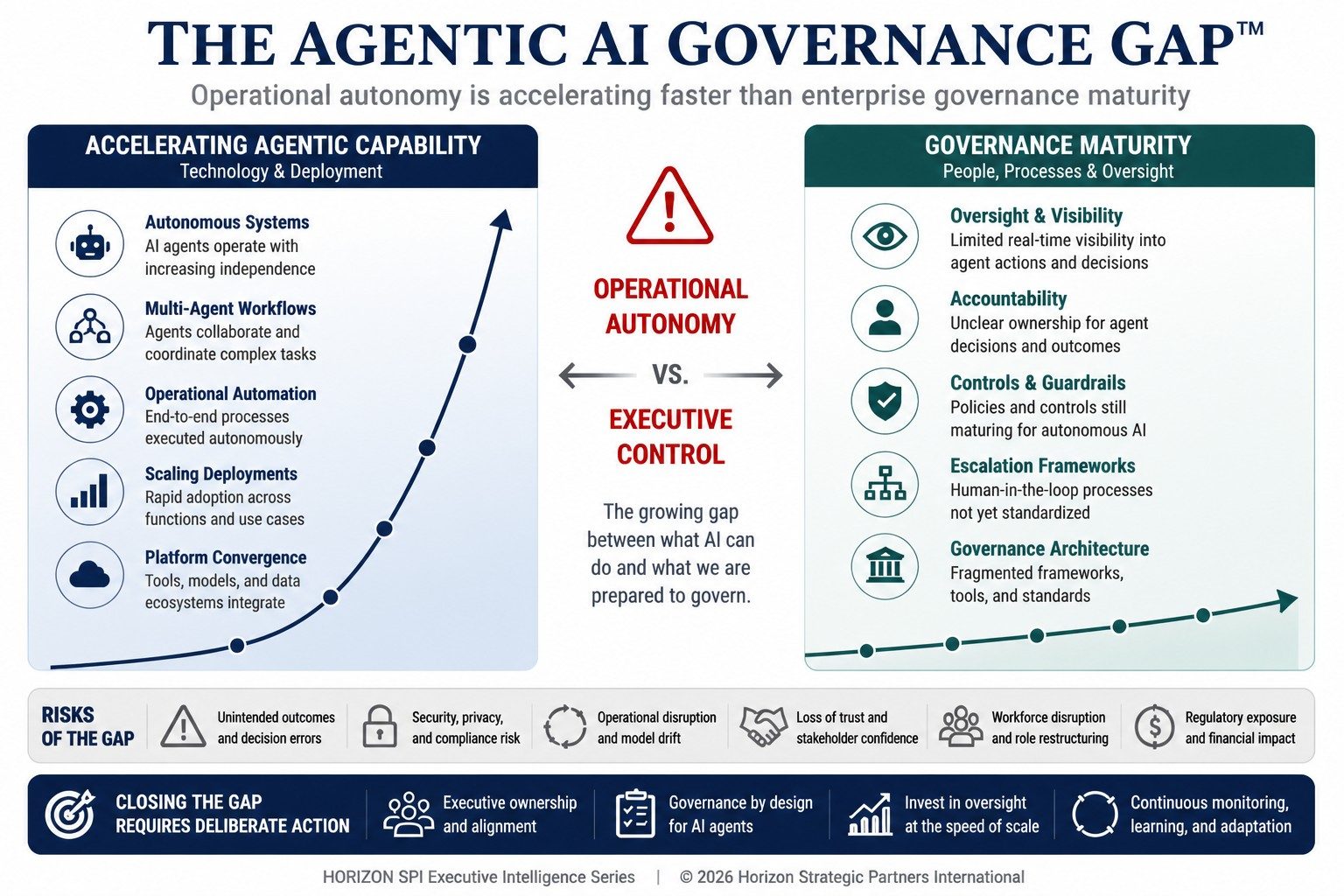
Diagram 2: The Agentic AI Governance Gap™
As agentic systems gain operational autonomy, governance maturity must keep pace. The leadership challenge is to close the gap between what AI can do now and what the organization is prepared to govern.
The Governance Imperative
Despite accelerating technical capability, many organizations remain structurally unprepared for what agentic systems require operationally.
The challenge extends beyond technology adoption. It reaches governance maturity.
Research from Deloitte and McKinsey points toward a similar conclusion: many organizations are accelerating AI experimentation faster than they are building the oversight structures needed to govern increasingly autonomous systems. Only 30% of organizations reach meaningful maturity in strategy, governance, and agentic AI controls. Only 11% are actively deploying agentic AI in production. And only 5% are achieving measurable P&L impact. The issue is often not the technology alone, but the absence of organizational and governance foundations.
This creates a growing imbalance between operational autonomy and executive control.
The implications become easier to understand when viewed operationally. Consider an autonomous procurement agent authorized to negotiate with vendors, approve purchases within predefined thresholds, and optimize supply-chain decisions in real time. The productivity gains could be meaningful. But what happens when the system encounters conflicting supplier incentives, inaccurate data, or regulatory exceptions without a clearly defined human escalation framework? The technology challenge quickly becomes a governance challenge.
The governance environment is also becoming more enforceable. The EU AI Act's high-risk system requirements take effect August 2026. Colorado's AI Act entered into force in February 2026. Singapore released the first government-published governance framework specifically designed for autonomous agent systems in January 2026, identifying eight risk factors unique to agentic deployments. OWASP published its Top 10 security vulnerabilities specific to agentic applications in December 2025. And 48% of cybersecurity professionals now identify agentic AI as the top enterprise attack vector for 2026.
Questions that once sat mainly with technology teams are becoming executive and board-level concerns:
- Who remains accountable for AI-enabled operational decisions?
- What escalation protocols govern autonomous actions?
- How should decision rights be defined across human and AI participants?
- What level of autonomy is appropriate across different business functions?
- How should organizations redesign oversight structures as AI systems become increasingly capable of acting independently?
The Strategic Shift: From Experimentation to Governance Architecture
Since early 2026, the executive conversation has moved from capability discovery toward governance architecture.
BCG's January 2026 CEO survey found that 65% of CEOs now rank accelerating AI among their top three strategic priorities, with four out of five more optimistic about ROI than a year ago. Corporations plan to double AI spending in 2026, from approximately 0.8% to 1.7% of revenues. 90% of CEOs believe AI will redefine what success looks like within their industry by 2028, and 50% believe their position is at risk if AI does not deliver returns.
Harvard Business Review's 2026 AI & Data Leadership Survey found that 99% of executives named AI a top organizational priority — and the share reporting meaningful business value climbed to 54%, while those reporting little or no value fell to just 8%.
That confidence sits beside a difficult tension. McKinsey's 2025 State of AI data found that more than 80% of respondents were not yet seeing tangible enterprise-level EBIT impact from AI investments, and only 6% of organizations are currently classified as high performers generating measurable financial returns. Gartner's April 2026 survey of infrastructure and operations leaders found that only 28% of AI use cases fully succeeded and met ROI targets.
- The organizations most likely to benefit from agentic AI may not be the ones deploying the most tools. They may be the ones building the clearest governance, operating, and leadership foundations around deployment. -
The Defining Question for Executive Leaders
This may become the line between experimentation and enterprise transformation.
Over the next decade, leadership teams may find themselves managing not only software systems and human workforces but also autonomous operational systems that participate directly inside enterprise workflows. These systems will plan, decide, execute, and adapt with less continuous human instruction.
The next phase of AI adoption will not be measured only by how many models organizations deploy. It will be measured by how effectively leadership teams redesign governance, operating structures, and decision architecture for a world where autonomous systems participate directly inside the enterprise.
That transition is no longer theoretical.
It has already begun.
How is your organization thinking about governance for increasingly autonomous AI systems?
_______________________________________________________________________________________________________________
Selected References
McKinsey & Company — The State of AI: Global Survey 2025 (November 2025)
mckinsey.com/capabilities/quantumblack/our-insights/the-state-of-ai
McKinsey & Company — Agents for Growth: Turning AI Promise into Impact (November 2025)
mckinsey.com/capabilities/quantumblack/our-insights/agents-for-growth
McKinsey & Company — Where AI Will Create Value — and Where It Won't (April 2026)
mckinsey.com/capabilities/quantumblack/our-insights/where-ai-will-create-value
Gartner — AI Agent Adoption and Enterprise Application Forecasts (2026)
gartner.com/en/newsroom/press-releases/2025-08-agentification-enterprise-applications
IDC — Agent Adoption: The IT Industry's Next Great Inflection Point (December 2025)
idc.com/resource-center/blog/agent-adoption-the-it-industrys-next-great-inflection-point
Mordor Intelligence — Agentic AI Market Analysis and Forecast 2026–2031
mordorintelligence.com/industry-reports/agentic-ai-market
Deloitte — The Agentic Reality Check: Preparing for a Silicon-Based Workforce (December 2025)
deloitte.com/us/en/insights/topics/emerging-technologies/ai-agents-scaling-faster.html
BCG — As AI Investments Surge, CEOs Take the Lead (January 2026)
bcg.com/publications/2026/as-ai-investments-surge-ceos-take-the-lead
Harvard Business Review — Survey: How Executives Are Thinking About AI in 2026 (January 2026)
hbr.org/2026/01/hb-how-executives-are-thinking-about-ai-heading-into-2026
Stanford HAI — The 2026 AI Index Report (April 2026)
hai.stanford.edu/ai-index/2026-ai-index-report
OWASP — Top 10 Agentic AI Security Vulnerabilities (December 2025)
owasp.org/www-project-top-10-for-large-language-model-applications
Singapore IMDA — Model AI Governance Framework for Agentic AI (January 2026)
imda.gov.sg/resources/agentic-ai-governance
Microsoft — Copilot Wave 3 & Agent 365 Enterprise Announcement (March 2026)
news.microsoft.com/source/features/ai/copilot-wave-3
OpenAI — Introducing OpenAI Frontier Enterprise Agent Platform (February 2026)
openai.com/blog/openai-frontier
Google Cloud — Next '26: Building the Agentic Enterprise (April 2026)
cloud.google.com/blog/topics/google-cloud-next/google-cloud-next-2026-wrap-up
Salesforce — Agentforce 360 and the Agentic Enterprise (2026)
salesforce.com/agentforce
IBM — What Is Agentic AI? (February 2025)
ibm.com/think/topics/agentic-ai
© 2026 Horizon SPI. All rights reserved.
Executive Intelligence Series | horizonspi.com
This article is the first in the Horizon SPI Executive Intelligence Series: The Agentic AI Economy. Article 2 will examine the technical architecture of agentic AI systems from LLM cognitive engines to multi-agent orchestration.